
Quality Control for Precast Concrete
Aiden Audit-Readiness + Repair & Scrap Management = Aiden Total QC
QC Inspections
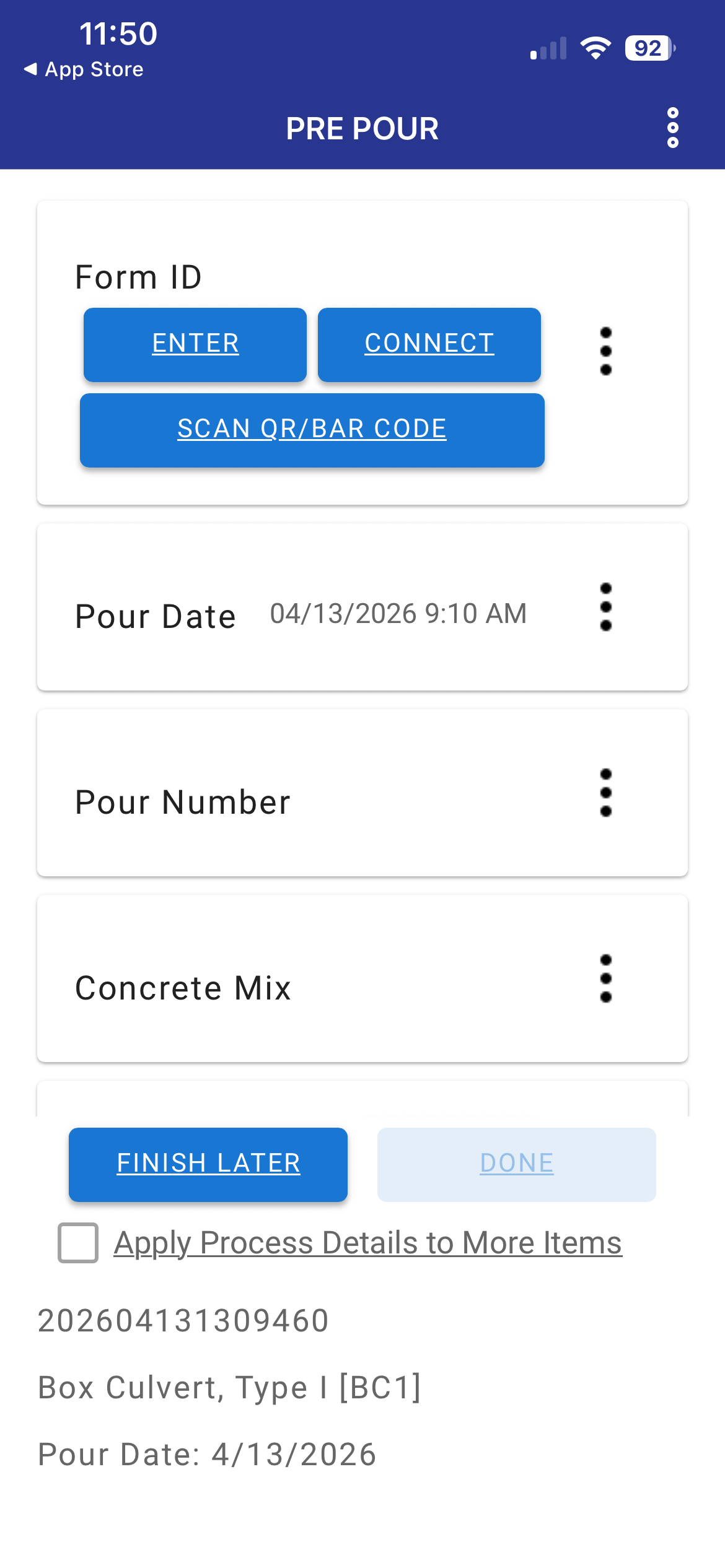
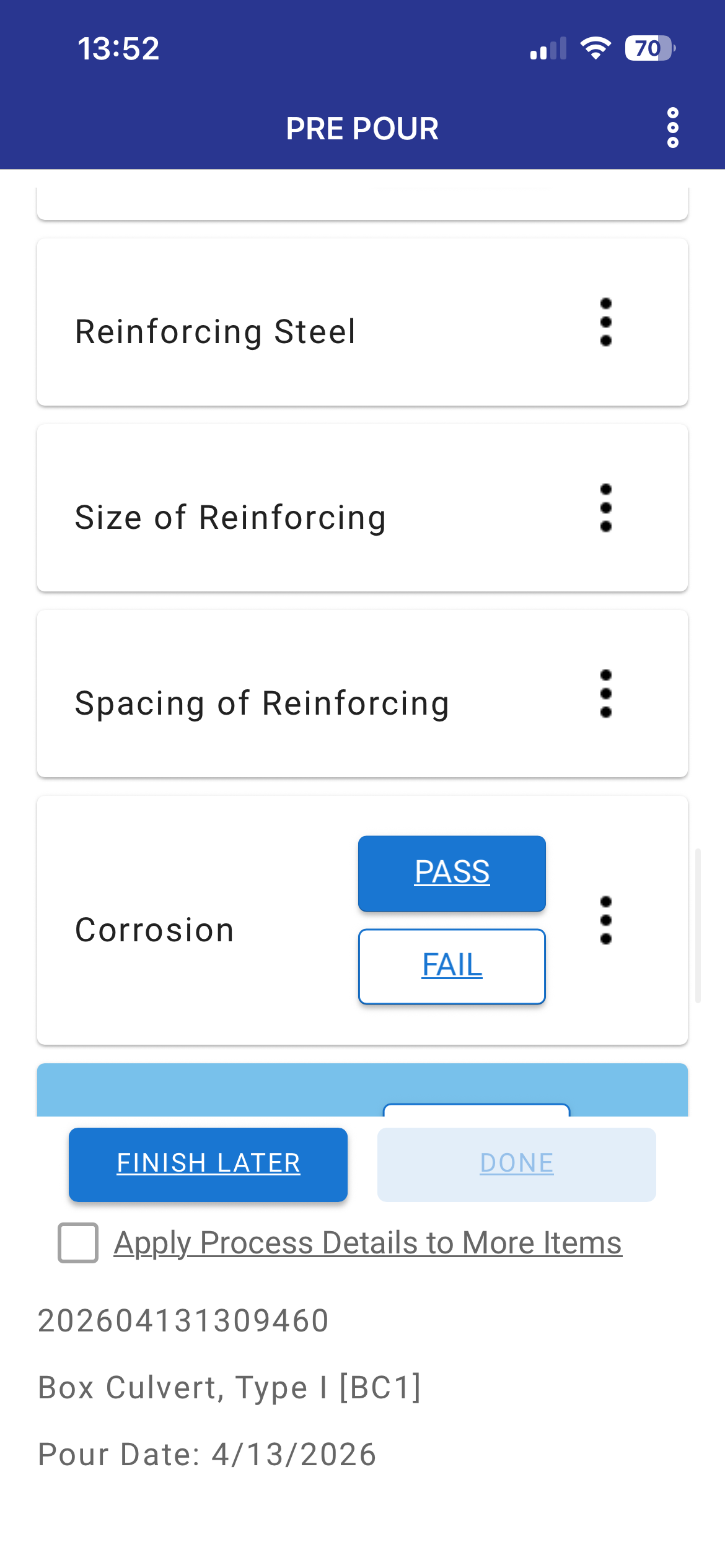
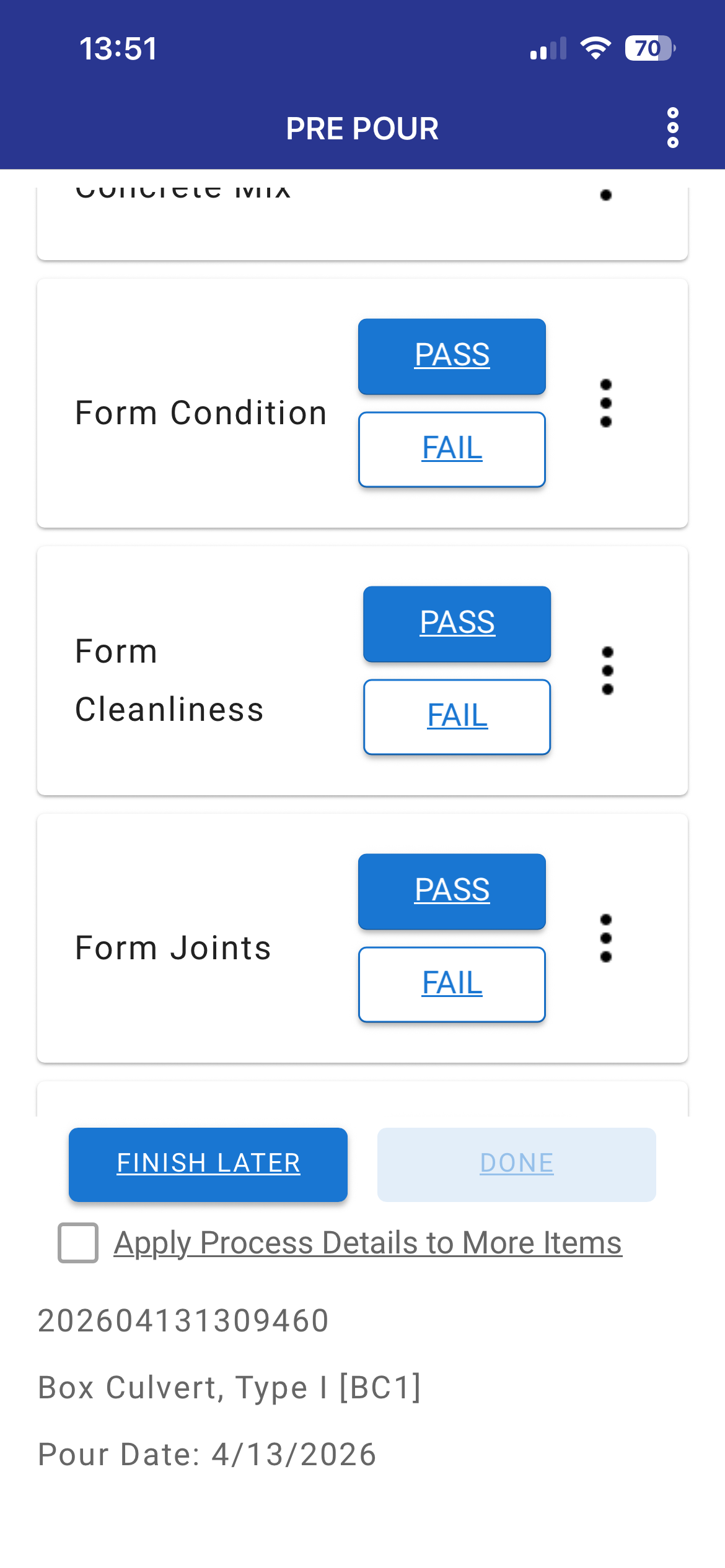
Precast concrete manufacturing inspections require accuracy, consistency, and timely reporting throughout every stage of production. From form setup and reinforcement verification to concrete placement, curing, finishing, and final quality checks, inspections play a critical role in ensuring product quality and compliance.
With digital inspection workflows, teams can complete inspections directly in the plant, capture detailed findings as they occur, document issues with photos, and maintain complete inspection records in real time. Standardized checklists help ensure procedures are followed consistently across production lines, while immediate access to inspection data improves communication between quality, production, and management teams.
By modernizing the inspection process, precast manufacturers can reduce paperwork, improve traceability, accelerate reporting, and maintain higher quality standards throughout production.
Repair & NCR Management
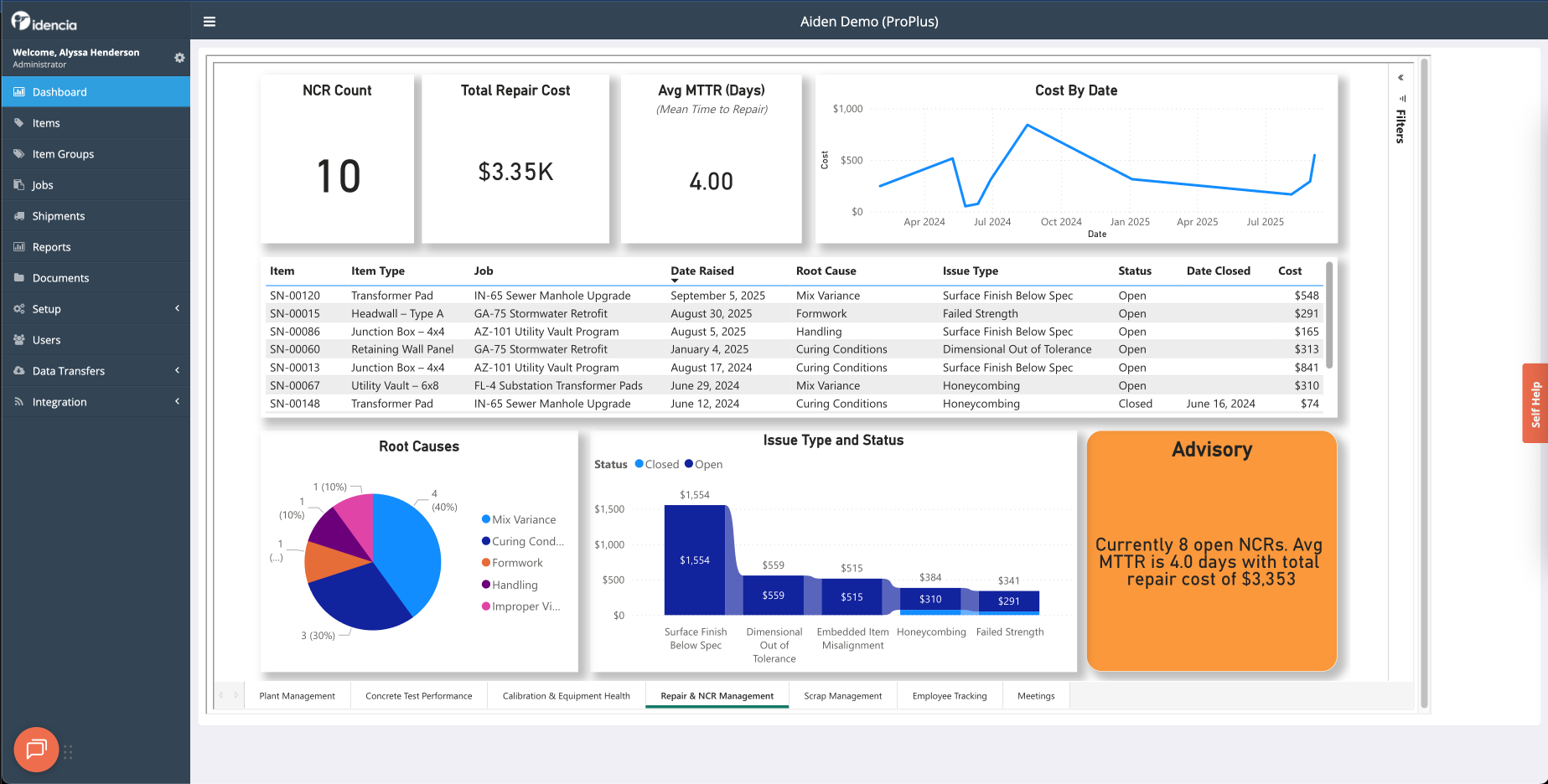
Gain complete visibility into non-conformance and repair activity across your precast concrete operation with the Repairs & NCR Management dashboard. Track NCR counts, repair costs, and average mean time to repair in real time to identify trends and improve response times.
The dashboard provides a centralized view of open and closed NCRs, root causes, issue types, and repair status, helping quality and production teams quickly pinpoint recurring problems such as surface finish defects, dimensional tolerances, honeycombing, or curing-related issues. Interactive charts and cost tracking tools make it easier to monitor performance, reduce downtime, and drive continuous quality improvement throughout the plant.
Scrap Management
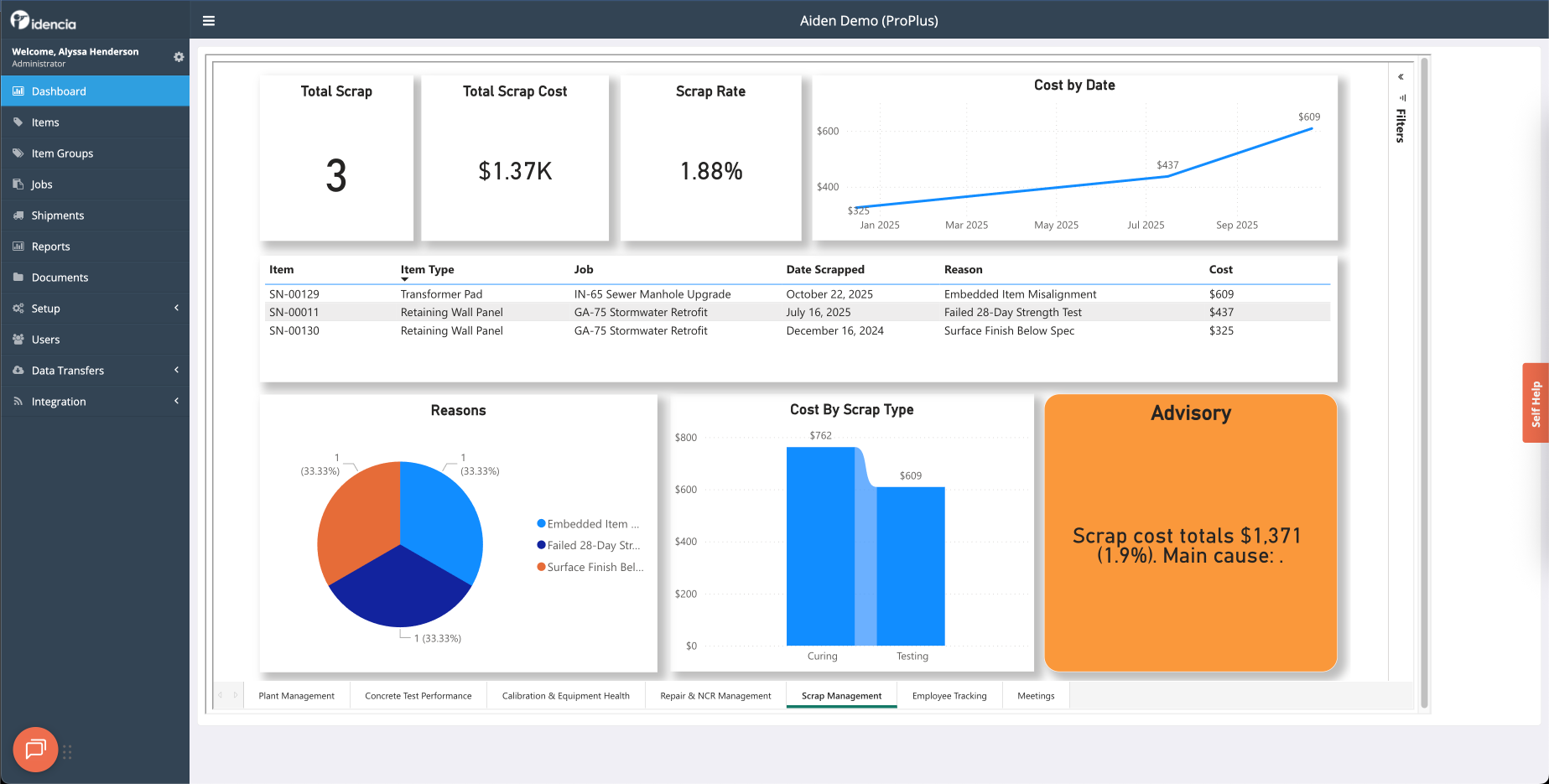
Monitor and reduce material waste with the Scrap Management dashboard. Designed for precast concrete manufacturers, the dashboard delivers real-time insight into scrap quantities, scrap costs, and overall scrap rates to help plants control production losses and improve profitability.
Track scrap trends over time, analyze the primary causes of rejected products, and identify the most costly defect categories. With detailed breakdowns by item type, job, and scrap reason, teams can quickly uncover process inefficiencies, improve production quality, and make data-driven decisions to minimize waste across operations.